

Competition Categories
 Image by Guy Harrop LBIPP
Advertising & Commercial
This category is for images intended for commercial use in promoting, marketing, or advertising a product, brand, service, or individual.
Aerial, automotive, food, products, still life, personal branding, music covers, and corporate photography are all encompassed within this category. In addition, composite and non-composite, and retouched images are permissible in this category.
Images must not include any text or graphic elements not present in the original capture (i.e. it is a photographic rather than a graphic design competition).
You must have captured all parts of the final image yourself and may not source any element from 3rd parties, e.g. stock imagery or AI generators.
 Image by Helen Tabor ABIPP
Architectural & Industrial
Architectural entries typically involve accurately documenting structures but can also employ more artistic techniques, such as capturing unusual angles or creating abstract images from the building’s form. This type of photography can encompass a variety of buildings and structures, including bridges, telecom towers, windmills, staircases, and monuments.
On the other hand, Industrial photography focuses on serving businesses in the industrial sector, such as engineering companies, manufacturers, factories, and high-tech startups.
Composite, non-composite, and digitally altered images created using software like Photoshop are permitted in this category.
You must have captured all parts of the final image yourself and may not source any element from 3rd parties, e.g. stock imagery or AI generators.
 Image by Martin Hillary FBIPP
Classical Wedding
Images must be taken during the wedding celebration, either a single or multiple-day celebration, reflecting the atmosphere and personalities while illustrating the photographer’s creativity, posing, technical skills and understanding of light.
Minor retouching, cropping, colour adjustments, and cleaning are allowed, as well as the use of HDR for extended tonal range.
Composite images are also allowed as long as post-production does not significantly alter the subject’s essence, e.g. head swaps, enhancing skies, etc. are permitted. However, you must have captured all parts of the final image yourself and may not source any element from 3rd parties, e.g. stock imagery or AI generators.
Images with significant manipulation must be entered into Illustration & Fine Art or Advertising/Commercial categories.
The entrant must be the primary photographer for the wedding.
 Image by Rachel Thornhill ABIPP
Documentary Wedding
The ability to capture unposed moments as they happen on a wedding day. These images must not be posed or staged and be actual moments. There has to be authenticity to the image.
Images must be taken on the day of the wedding or during the celebration, including multiple-day ceremonies, but not staged, taking the couple off to compose shots. Celebrating the magic of the day captured through the eyes of a photojournalist
Post-production must be kept to a minimum and not over-manipulated and be as the scene was at the time the image was taken. Entrants are permitted to carry out minor skin retouching, crop, rotate, brighten and darken the image locally, reduce noise, sharpen, adjust colour/black and white, use grain and minor cleaning such as removing sensor dust and chromatic aberration and use of HDR for extended tonal range.
 Image by John Parris FBIPP
Environmental Portrait
This category may include one or more people and must have been created outside a studio environment. Images can be traditional or contemporary and should capture the atmosphere of the location as well as the character of the subject.
Adults, youth, children, toddlers, families, self-portraits: artistic images capturing the unique personalities and characteristics of a person or group of people as well as the photographer’s creative vision and technical skills.
Post-production must be kept to a minimum and not over-manipulated and be as the scene was at the time the image was taken. Entrants are permitted to carry out minor skin retouching, crop, rotate, brighten and darken the image locally, reduce noise, sharpen, adjust colour/black and white, use grain and minor cleaning such as removing sensor dust and chromatic aberration and use of HDR for extended tonal range.
 Image by Giorgia Corniola
Fashion & Beauty
Fashion photography showcases a lifestyle, generates interest or encourages product, business, or fashion brand purchases among customers. This category typically features clothing, fashion accessories, makeup, or styling.
On the other hand, beauty photography emphasises the beauty of someone or something and can be either artistic or commercial, using glamour-style portraiture.
Images must not include any text or graphic elements not present in the original exposure (i.e. it is a photographic rather than a graphic design competition).
You must have captured all parts of the final image yourself and may not source any element from 3rd parties, e.g. stock imagery or AI generators.
 Image by Fiona Spence ABIPP QEP
Fine Art & Digital Creation
This category is for images that depict an idea or concept, with creativity, originality, and storytelling being essential components.
It is intended for images predominantly produced or modified through digital technologies such as 3D modelling, editing, CGI software, or other similar means.
These images may be composites or involve multiple exposures, and heavily digitally post-processed photos are permitted.
Composite, non-composite, and digitally manipulated images, such as those created using Photoshop or similar software, are allowed. However, the images used to create the underlying concept of the final picture must be captured or created by the photographer and not be stock images.
All images must be presented as single-frame images. However, panoramic images (created using photo stitching), focus stacking, multi-exposures captured simultaneously in the same location (as a continuous sequence, seconds or minutes apart), and HDR for extended tonal range are allowed.
Note that images created using AI or Machine Learning generators such as (but not limited to) Midjourney or DALL-E are not eligible and will result in immediate disqualification.
 Image by David Bostock FBIPP
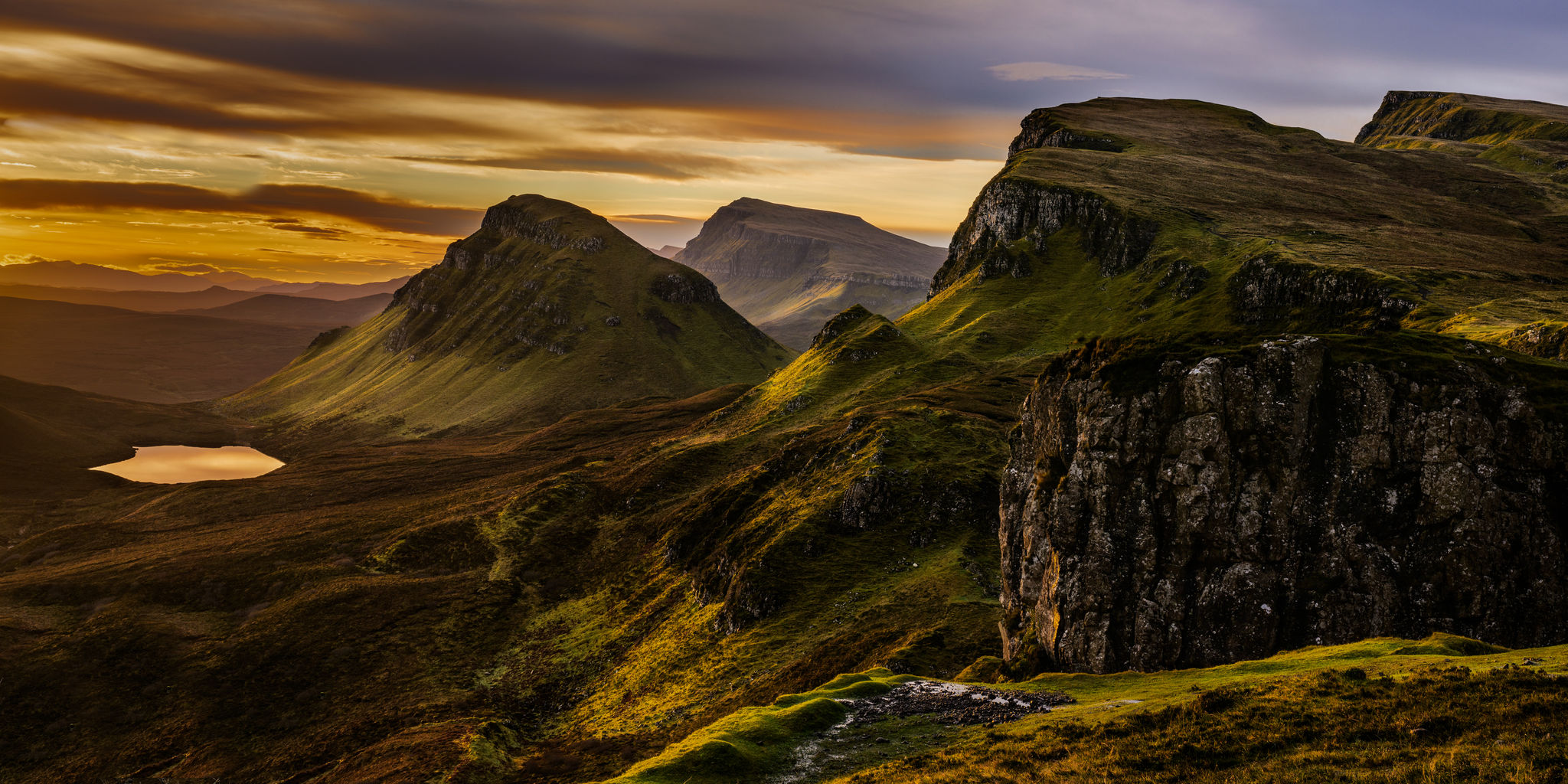
Landscape
Landscapes, natural and artificial landscapes, urban landscapes, cityscapes, sunsets, and astrophotography are allowed in this category.
All images must be presented as single-frame images. However, panoramic images (created using photo stitching), focus stacking, multi-exposures captured simultaneously in the same location (as a continuous sequence, seconds or minutes apart), and HDR for extended tonal range are allowed.
You must have captured all parts of the final image yourself and may not source any element from 3rd parties, e.g. stock imagery or AI generators.
 Image by Panikos Hajistilly MQEP FBIPP
Natural World
This category is for nature photography, including plants, animals, and natural scenes. Macro and underwater photography are also included in this category.
Entries must not deceive viewers or alter the content of the image. Animals NOT in their natural habitat, such as pets, farm animals, those kept in zoos or animals that are trained, should be entered in the Pets & Domesticated Animals category.
Minor adjustments such as cropping and colour correction are allowed, but composite and heavily manipulated images are strictly excluded and should be entered in the Fine Art & Digital Creation category.
Multiple exposure images in the form of focus-stacking and HDR (and similar) techniques to extend tonal range are permitted.
If it comes to the jury’s knowledge that the creation of any image has caused suffering to animals or destruction of the natural environment, participants may be disqualified. If such, or other violations of the rules are discovered after the work of the jury, the participant may lose any title and may return any prizes and trophies.
 Image by Stephanie Thornton ABIPP
Newborn
This category is for baby/babies up to 8 weeks old (or up to 8 weeks corrected) at the time of capture. For babies and children over this age, please enter your image into one of the other portrait categories.
Parents/carers may not be included in the image unless used as a prop, e.g. arms, fingers, shoulders etc.
You must have captured all parts of the final image yourself and may not source any element from 3rd parties, e.g. stock imagery or AI generators.
 Image by Ian Boichat ABIPP
Pets & Domesticated Animals
This category is for animals not in their natural habitat, including tame animals such as pets, farm animals, or those residing in zoos.
Animal portraits can be captured in a studio or on-location setting.
Composite images are permitted, provided that the digital post-production does not significantly alter the natural appearance of the animal(s) or the environment as-shot. Post-production to remove of handlers, distracting elements, etc. using a variety of techniques and composites using multiple images from the same session are permitted. Images with significant manipulation or post-production should be submitted to the Fine Art & Digital Creation category.
It is important to note that animals photographed in their natural habitat must be entered into the separate Natural World category.
You must have captured all parts of the final image yourself and may not source any element from 3rd parties, e.g. stock imagery or AI generators.
 Image by Kerry Steyn
Reportage & Photojournalism
This category is for unaltered photographs that capture actual events, life, areas of human interest, public or private occasions, news, and emotional moments.
Subjects include general news, contemporary issues, political and social events, environmental topics, cultural events, wars, conflicts, photo essays, and feature stories.
However, wedding-related images should be submitted under the Documentary Wedding category.
The entrants are not allowed to combine multiple photos, alter, add, delete, or move any elements in the image using tools like cloning, healing, patching, content-aware fill, or liquify.
 Image by Colin Brister ABIPP
Sport
This category is for all sports-related photography, editorial or artistic, featuring any competitive or recreational sport, sport-people and activities.
You must have captured all parts of the final image yourself and may not source any element from 3rd parties, e.g. stock imagery or AI generators.
 Image by Stephanie Thornton ABIPP
Studio Portrait
This category may include one or more people and must be created in a studio environment. Images can be traditional, contemporary or fine art in nature.
Adults, youth, children, toddlers, families, self-portraits: artistic images capturing the unique personalities and characteristics of a person or group of people as well as the photographer’s creative vision and technical skills.
Entrants are permitted to carry out skin retouching, crop, rotate, brighten and darken the image locally, reduce noise, sharpen, adjust colour/black and white, use grain and minor cleaning such as removing sensor dust and chromatic aberration and the use of HDR for extended tonal range.
Composite elements such as textured backgrounds are allowed. However, you must have captured or created all parts of the final image yourself and may not source any element from 3rd parties, e.g. stock imagery or AI generators.
Portraits with significant post-production, such as adding CGI backgrounds or virtual worlds, should be entered into the Fine Art & Digital Creation category.
 Image by Nagayuki Kojima FBIPP
Wedding Fashion
This category is for wedding photography, capturing the couple together before or after their wedding day. For example, it may be a pre-wedding shoot capturing the couple in their outfits on location or a trash-the-outfit session in the weeks after the wedding. The images may be classic or contemporary in style.
Images taken during the wedding celebration, either a single or multiple-day celebration, should be entered into either the Classical or Documentary Wedding categories.
You must have captured all parts of the final image yourself and may not source any element from 3rd parties, e.g. stock imagery or AI generators.